Why Tourism SMMEs Face Unique Barriers
Accessing finance is difficult for most small businesses—but tourism enterprises face an added layer of complexity.
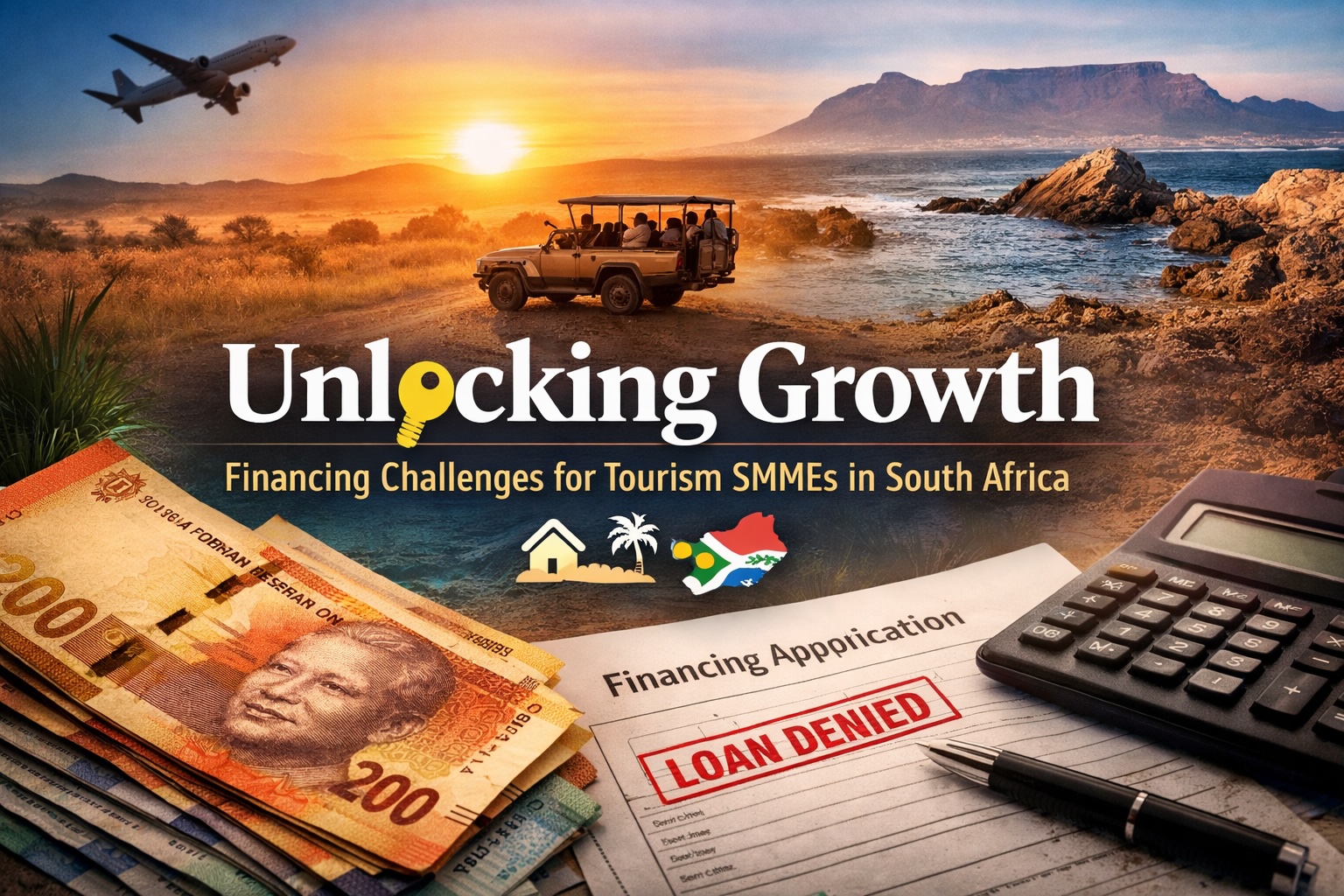
Traditional lenders often perceive SMMEs as high-risk, especially in their early stages. Many lack the collateral, credit history, or audited financial statements required to secure loans. For tourism businesses, the challenge is even greater because much of their value lies in intangible assets—such as brand, experience, and location—rather than physical assets that banks can easily finance.
Stricter lending regulations introduced after the 2008 global financial crisis have further compounded the issue, with financial institutions prioritizing risk mitigation and often favoring larger, more established firms.
Why This Matters Now
The consequences of limited access to finance extend far beyond individual businesses.
SMMEs contribute around 40% of GDP in developing economies and account for up to 80% of jobs in Africa. In South Africa, tourism SMMEs alone contribute significantly to economic activity and employment, making them a critical lever for inclusive growth.
Strengthening this segment doesn’t just support entrepreneurs—it creates ripple effects across entire communities, stimulates regional economies, and enhances resilience in a sector that is inherently interconnected.
Signs of Progress: A Shifting Funding Landscape
Encouragingly, the financing landscape is beginning to evolve.
Innovative funding models and strategic partnerships are opening new pathways for SMMEs. For example, risk-sharing agreements between development finance institutions and commercial banks are helping unlock lending by reducing exposure for financial institutions.
Programmes and initiatives are also playing a catalytic role. Government-led efforts—such as the Tourism Incentive Programme—alongside private sector and development initiatives, are working to bridge funding gaps and provide targeted support.
These include:
- Green and transformation-focused tourism funds
- Market access and grading support programmes
- Youth entrepreneurship grants
- Business incubation and enterprise development partnerships
- Microfinance and guarantee-backed lending solutions
Together, these interventions are helping to build a more inclusive financial ecosystem.
The Missing Piece: Awareness and Readiness
While funding opportunities are expanding, access remains uneven.
A key barrier is not just the availability of finance—but awareness and preparedness. Many SMMEs are unaware of existing programmes or lack the financial literacy required to qualify. Challenges such as poor record-keeping, limited understanding of cash flow, and difficulty demonstrating creditworthiness continue to hinder access.
This highlights a critical insight: closing the financing gap requires more than capital. It demands a parallel investment in education, information sharing, and capacity building.
A Defining Opportunity for South Africa
As alternative financing models gain traction globally, South Africa has a unique opportunity to reimagine how it supports its tourism SMMEs.
By combining innovative funding mechanisms, strong public-private collaboration, and improved financial education, the country can unlock the full potential of a sector that is uniquely positioned to drive inclusive growth.
Ultimately, enabling access to finance for tourism SMMEs is not just about supporting businesses—it’s about empowering communities, fostering entrepreneurship, and building a more resilient and equitable economy.