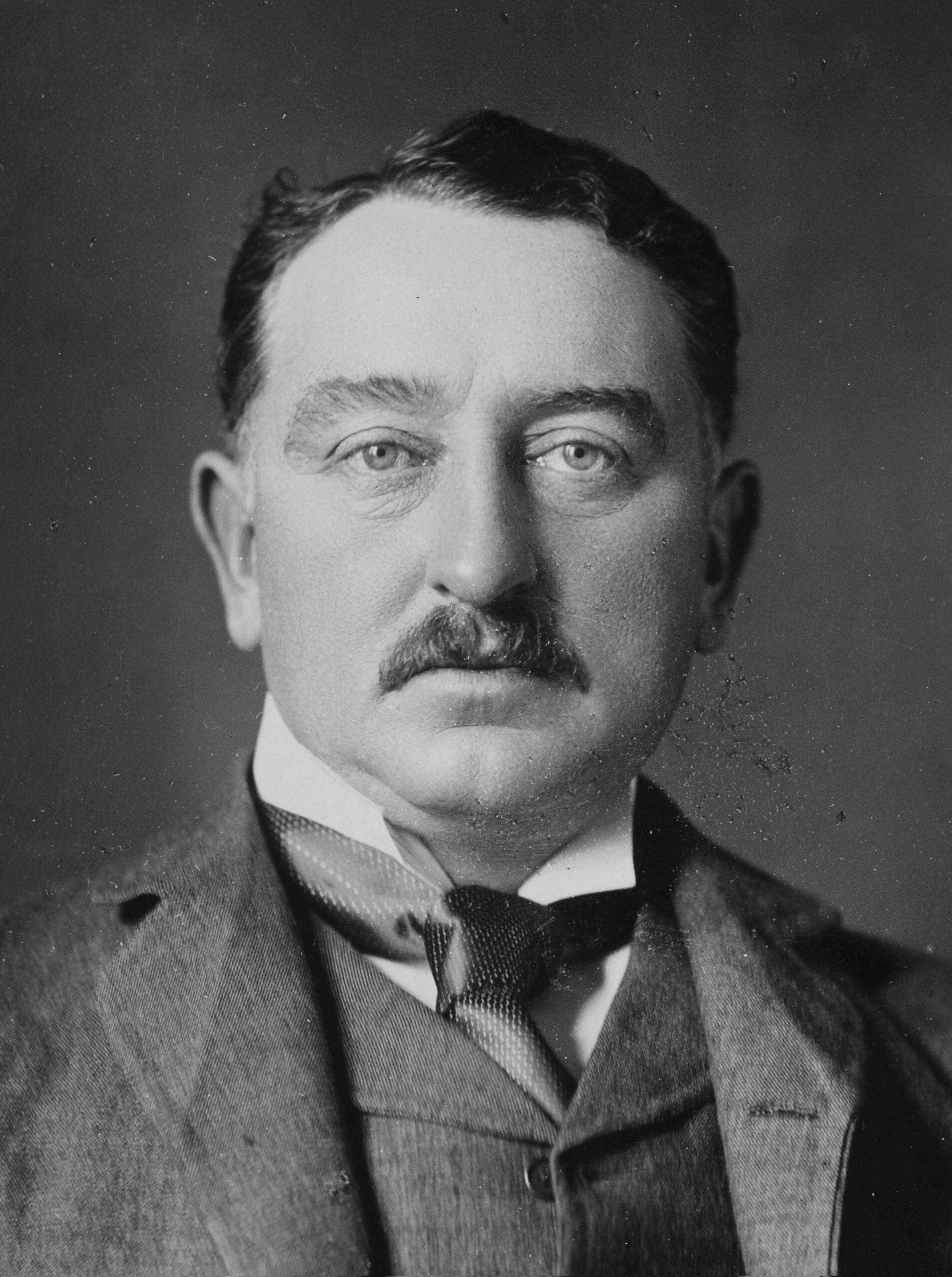
Cecil John Rhodes was one of the most influential — and most debated — figures in southern African history. A British businessman, politician, and imperialist, his actions reshaped the political, economic, and social landscape of the region in the late 19th century.
Born in 1853 in Bishop’s Stortford, England, Rhodes was the fifth son of a Church of England vicar. Frail health led his family to send him to South Africa at just 17 years old, hoping the warmer climate would improve his condition. What followed was a life that would leave a permanent imprint on the Africa continent.
From Sickly Teenager to Diamond Tycoon
Rhodes arrived in Natal in 1870 and soon moved to the booming diamond fields of Kimberley. Starting as a small-scale digger, he showed early genius for business strategy rather than physical labour.
Through aggressive buying of claims, clever partnerships, and financial backing from powerful investors — including the Rothschild banking family — Rhodes consolidated control over Kimberley’s diamond industry.
In 1888, he co-founded De Beers Consolidated Mines, creating a near-global monopoly on diamond production that would dominate the market for more than a century.
Political Power and Racial Policy
Rhodes entered politics young, becoming a member of the Cape Parliament at age 27. In 1890, he became Prime Minister of the Cape Colony, a position he held until 1896.
His time in office was marked by policies that reshaped South Africa’s political system — often at the expense of Black Africans:
The Glen Grey Act (1894) restricted African land ownership and laid foundations for later segregation laws.
The Franchise and Ballot Act (1892) raised property and income requirements, effectively stripping many Black citizens of their right to vote.
These laws are now widely seen as early building blocks of institutional racial discrimination in South Africa.
Empire Builder: From Dream to Dominion
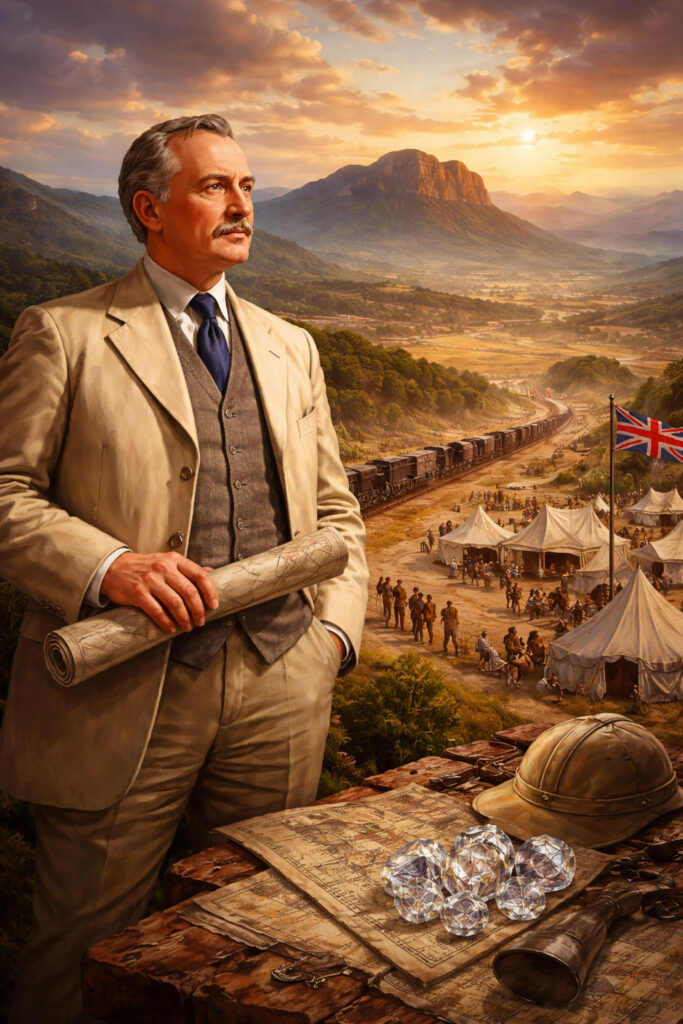
Rhodes was a passionate believer in British imperialism. He dreamed of a British-controlled Africa stretching “from the Cape to Cairo.”
To pursue this vision, he founded the British South Africa Company (BSAC), which gained royal charter in 1889. Through treaties, military force, and political pressure, the company seized vast territories north of the Limpopo River — lands that later became:
Southern Rhodesia (now Zimbabwe)
Northern Rhodesia (now Zambia)
These acquisitions displaced local communities and reshaped regional power structures — benefits for empire, devastation for indigenous peoples.
The Cecil John Rhodes Memorial
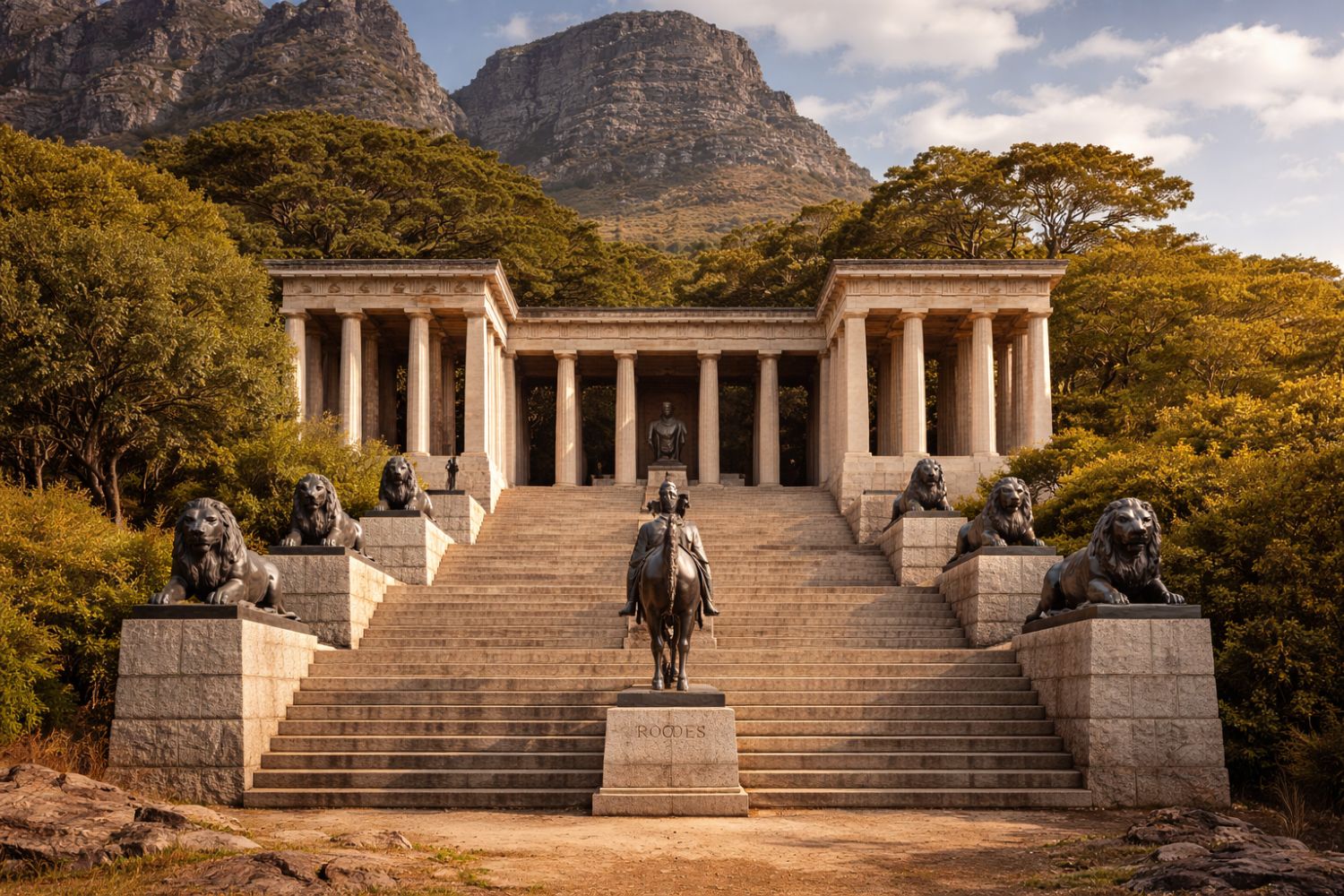
One of the most visible reminders of Rhodes’s legacy is the Cecil John Rhodes Memorial on the slopes of Devil’s Peak in Cape Town. Completed in 1912, the monument was designed in a grand Greek temple style, featuring broad stone steps, bronze lions, and a bust of Rhodes himself.
Built to honour Rhodes as a British imperial hero, the memorial today carries a very different meaning for many South Africans. While once celebrated as a symbol of empire and expansion, it is now widely viewed as a reminder of colonial domination and racial inequality — making it both a historic landmark and a site of ongoing debate.
The Rhodes Scholarship: A Different Kind of Legacy
Despite his deeply controversial politics, Rhodes left behind one institution that still shapes lives today: the Rhodes Scholarship.
Established in his will, it funds students from around the world to study at Oxford University, with the goal of developing future global leaders. For some, this represents his most positive contribution. For others, it remains inseparable from the wealth built through exploitation.
The Jameson Raid: A Career-Ending Blunder
Rhodes’s political downfall came after the disastrous Jameson Raid (1895–1896) — an unauthorized attempt by his ally Dr. Leander Starr Jameson to overthrow the Boer government in the Transvaal.
The raid failed spectacularly, embarrassed Britain internationally, and exposed Rhodes’s involvement behind the scenes. Forced to resign as Prime Minister, his political career never recovered.
A Private Man with a Complicated Legacy
Rhodes never married and devoted most of his life to business and empire-building. He suffered from chronic heart and lung problems, which shaped many of his life choices — including his early move to South Africa and his intense, often obsessive work ethic.
Historians have long debated his personal relationships, especially his close bonds with younger men such as Neville Pickering, his secretary. While no definitive conclusions exist, these relationships add depth to the portrait of a man often reduced to power and ambition alone.
Death and a Controversial Resting Place
Rhodes died in 1902, at just 48 years old, in Muizenberg, Cape Colony. In line with his wishes, he was buried at Malindidzimu (now Matobo Hills, Zimbabwe) — a sacred site to the local Shona people.
His burial there remains deeply controversial, symbolising for many the lasting scars of colonial domination.
How History Sees Rhodes Today
Cecil John Rhodes’s legacy is irreversibly complex.
Supporters point to:
Infrastructure development (railways, telegraphs, ports)
Agricultural investment, especially in Cape fruit farming
Expansion of education through the Rhodes Scholarships
Critics emphasise:
Land dispossession of African communities
Racially discriminatory legislation
Corporate imperialism and economic exploitation
The foundations laid for future segregation and apartheid systems
Today, statues of Rhodes have been removed, protested, or relocated across southern Africa and the UK — a public symbol of how fiercely contested his memory remains.
Final Word
Cecil John Rhodes was neither simply a villain nor merely a visionary. He was a man of his time — but also a man whose actions shaped the future far beyond his lifetime.
His story forces us to confront uncomfortable truths about empire, power, race, and legacy — and reminds us that history isn’t just about what was built, but who paid the price for it.
Frequently Asked Questions
Who was Cecil John Rhodes? Cecil John Rhodes was a British businessman, politician, and imperialist who played a major role in shaping southern Africa in the late 1800s through mining, politics, and territorial expansion.
Why is Cecil John Rhodes controversial? Rhodes is criticised for promoting racial inequality, supporting land dispossession of African communities, and advancing British imperial rule at the expense of indigenous peoples.
What is the Cecil John Rhodes Memorial? The memorial on Devil’s Peak in Cape Town was built in 1912 to honour Rhodes. Today, it stands as both a historic landmark and a symbol of South Africa’s complex colonial past.
What is the Rhodes Scholarship? The Rhodes Scholarship funds students from around the world to study at Oxford University. It remains one of Rhodes’s most enduring legacies.
Why did Cecil John Rhodes dream of a Cape to Cairo route? Rhodes believed that building a railway from Cape Town to Cairo would unite British territories across Africa, strengthen trade, and secure British political control of the continent. To him, it symbolised empire, progress, and power — though today it is also seen as a reminder of colonial ambition and expansion.
Why is Rhodes’s legacy still debated today? Because his achievements in business and education are inseparable from the harm caused by his political policies and imperial ambitions — making him a figure who represents both influence and injustice.
At South Africa Online Travel Magazine, we love our country’s history — the inspiring parts, the complicated chapters, and the stories that shaped who we are today. From iconic landmarks to controversial figures, we believe history isn’t just something to remember, it’s something to understand. By exploring South Africa’s past with honesty and curiosity, we celebrate our heritage while creating space for reflection, learning, and meaningful conversations about the road that brought us here.